

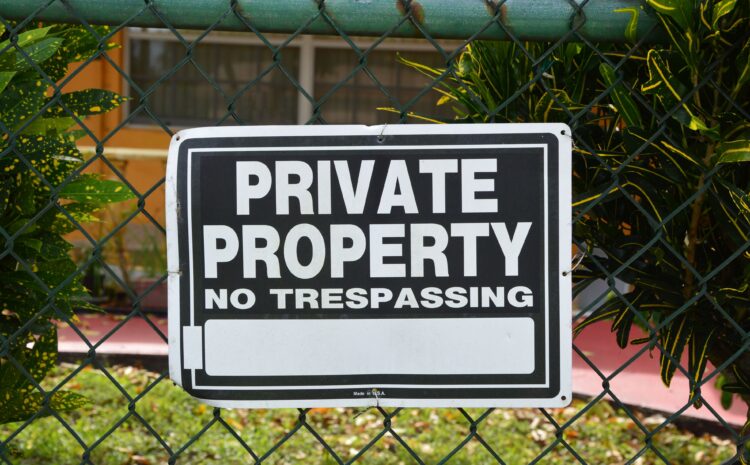
Trespass claims involve allegations that a person unlawfully entered or remained on another party’s property without authorization. These disputes may arise between neighbors, businesses, property owners, or other parties involved in civil litigation.
Because trespass claims often depend on the specific facts surrounding the alleged entry, courts carefully examine the property involved, the actions of the parties, the available evidence, and the applicable law before determining whether the claim has been established.
Identifying the Property Involved
Courts first determine the property that is the subject of the dispute. This may include residential, commercial, agricultural, or other privately owned property, depending on the circumstances of the case.
The location, property boundaries, and ownership interests may all become relevant during the court’s analysis. Clearly identifying the property helps establish the foundation of the claim.
Examining the Alleged Entry
Courts next evaluate the conduct that allegedly resulted in the trespass. The analysis focuses on the circumstances surrounding the entry and whether it occurred without legal authorization or permission.
Depending on the facts, courts may examine when the entry occurred, how access was obtained, and whether the individual remained on the property after permission had been denied or withdrawn.
Reviewing the Evidence
Trespass claims often rely on photographs, videos, surveys, property records, witness testimony, communications, and other admissible evidence. Courts review this information to understand what occurred and how the events unfolded.
Rather than relying solely on allegations, courts evaluate whether the available evidence supports the claimed trespass. The credibility, consistency, and reliability of the evidence all contribute to the court’s evaluation.
Evaluating Harm and Property Rights
Courts also consider the property rights involved and whether the alleged trespass resulted in legally recognizable harm. The specific facts of the dispute often determine how these issues are analyzed.
Depending on the circumstances, courts may examine property damage, interference with the owner’s use of the property, or other claimed losses supported by the evidence.
Applying the Relevant Legal Standards
The legal standards governing trespass claims vary depending on the jurisdiction and the facts of the dispute. Courts apply the applicable law to the evidence presented throughout the litigation.
Courts may also consider available defenses, procedural requirements, and other legal issues that influence how the claim is analyzed and resolved.
Understanding How Courts Evaluate Trespass Claims
Courts evaluate trespass claims by identifying the property involved, examining the alleged entry, reviewing the available evidence, evaluating property rights and harm, and applying the relevant legal standards.
Because every trespass case involves unique facts and circumstances, courts analyze each claim individually. Understanding this process provides insight into how trespass claims are evaluated in civil litigation.